
By Rebecca Hammond
LAST SPRING I BOUGHT A BEE HOUSE AT ALDI, being Aldi-priced into an impulse buy I didn’t really think would pan out. And last summer I was right. Although an occasional firefly hung out during the day, no bees showed any interest.
This May, mason bees found the house and got to work, and were as engrossing as birds at the feeder. They spent about a month filling almost every cavity, each now containing 4 or 5 larvae, each plugged with mud. The bees will not emerge until next summer. I noticed that they didn’t work in any form of bad weather. Maybe they have a union.
I recently watched a mother squirrel trying to get a half-grown offspring into a nest cavity in a silver maple. She crossed the street looking like she was wearing a fur stole, and ran up the maple, to spend long minutes stuffing the young squirrel into a hole it had no interest in entering. I was certain the hole was simply too small (she reminded me of a back-packer trying to get a sleeping bag into a stuffsack) but once the baby was in, she went in, too. Days later, small squirrels spent hours playing near that hole. Why that one young squirrel left the nest so early, and even crossing the street, I’ll never know, but it didn’t escape Mom. Our big, beautiful trees are wildlife assets. Our big oaks, especially, not only provide wildlife housing, but caterpillars that feed birds and their broods.
We have a bird house that has sheltered chickadees for almost 30 years, and they need thousands of caterpillars for each brood. We don’t, as recommended, remove the old nest each year, but we did have to repair a wooden house nearby, and found inside a perfect bagel-shape of cat fur and moss, fur from our 22-year-old cat Gizzie (we put the winter’s fur combed from her out every March), moss from who knows where.
So when spring cleanup at our cabin left us with a sheet of moss removed from a concrete step, a furthering of the habitat here seemed possible. Just bring the moss home, tear it up, press it down and keep it watered for awhile, right? Wrong. Robins, even in our fairly moss-free world, knew from the get-go that worms live under moss, and they tossed it around as they do leaves. I refuse to be thwarted by robins, so began holding the moss down with rocks, then poultry staples, 3-inch common nails with “washers” cut from a hummus lid, and finally T pins. All this does is make robins more creative. I now have hundreds of tiny pieces of moss that I hope soon become uninteresting. Online recommendations for getting moss started include putting moss in a blender (!!!) with water and buttermilk, and dumping the slurry here and there. This just seems mean to moss, possibly necessitating a Society for the Protection against Cruelty to Moss. But maybe the person who dreamed this up had robins.
ALTHOUGH WE HAVEN’T SEEN A NEIGHBORHOOD RAT since about 2015, they are still abundant in parts of Ferndale, and the Ferndale Rat Patrol dispenses advice and encouragement. Group leader Laura Mikulski messaged me this: “As a grassroots community group, we came together after a Ferndale neighborhood group met with the city and weren’t satisfied by the information from the pest control company the city brought in to address how to eliminate rats. They offered poison in heavy bait boxes as the only solution besides typical preventative measures. Myself and several founding members of the group had been trapping effectively for years, and decided coordinating efforts would be a more holistic, environmentally conscious way of eliminating rats.”
Why no poisons? “Because the second-generation anticoagulants are being proven to kill pets and wildlife over long periods of time. While pest control companies say that lethal doses of bromadiolone is impossibly big to achieve death of a pet, the sad fact is that second-generation poison bio-accumulates within animals, and eventually kills them. In wildlife populations studied in California, they’re finding that the poison can last eight months in the liver of animals, giving predators and pets alike ample time to consume more than one rat, and really skewing the possibility toward eventually poisoning. Due to predator secondary poisoning, rat populations flourish unabated. Remove the predators, and rats can repopulate ad nauseum.” I’m hearing screech owls, and neighbor Dan Tanner just got a wonderful shot of one taking off from a power line, and I concur. Let the predators live.
Erika Sandberg added a cautionary tale on the Rat Patrol Facebook page: “We don’t use poison, yet my dog still got into some. Other than a stressful afternoon and an unplanned vet bill, everything should be fine. But if I hadn’t witnessed her grabbing the poison, my dog probably would’ve eaten the whole thing and started unexplainably bleeding a few days from now. Thank you for discouraging the use of poison. I for one really appreciate your efforts. Poison is a selfish means of pest control as it impacts so many more than just the intended target.”
This is a banner year for monarch butterflies, both in numbers people are seeing, and in those planting milkweed and raising caterpillars indoors (where they are much more likely to survive). Raising monarchs is easy and close to foolproof. Some of the happiest people I know at this moment are currently raising their first families of caterpillars, and sharing the experience on social media. If you want plants, eggs, or caterpillars, find the Ferndale.
Rebecca Hammond lives with her husband Phil on their mini-sanctuary in Ferndale.
 and Math). They’ll meet on Tuesday, August 21 to take “The Skyscraper Challenge!” Materials will be provided for STEAM participants to build a model skyscraper. The goal is to find a way to create the tallest free-standing model (skyscraper), while instilling the principles of math, geometry and teamwork. Registration is required.
 mother and she threw holy water at us. I thought it was ‘interesting’ and, as two film students at the time, we wrote it on a sticky note to add it in a potential short film. Two weeks later, she tried to force feed us ‘holy grapes’ and you can say the book wrote itself. We had offers from publishing houses with horrible contracts, so we decided to self-publish to have more freedom in what we write and produce.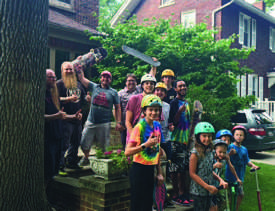


 Detroit, including exhibits at the Scarab Club, River’s Edge Gallery, Downriver Council of the Arts, Carr Center for the Arts, Detroit Artist Market, Grosse Point Art Center, Ariana Gallery, 4731 Studio, and the Padzieski Art Gallery. Here in Ferndale, she’s recently had showings at Level 1, the Conserva, and M Contemporary.
 opportunities. Romania is my birth country, and growing up I enjoyed the outdoors and nature after school with my watercolor supplies. I started to paint at ten. Both places, Romania and Michigan, have their unique beauty. I love to capture in my watercolors or canvasses the beauty of places and people. Each country has its particular energy, traditions, and beauty and I love to immortalize. I take my sketchbook and water-colors everywhere to make sure I don’t miss any opportunities.”
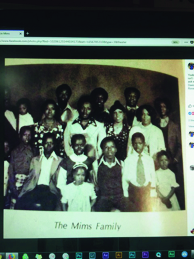 the ‘school of no return.’ But Mother Mims’ decency affected him, and he called Cooley High School instead. “When the Mumford principal made that call, everything changed. All I wanted was to graduate high school and please my mama. Had a year-and-a-half to get it together.” He kept going, thanks to Cooley Coach Ernest Thomas, who told him “Take everything you’ve got and put it on the field.”
 Valencia was supportive when Mims decided to start physical training. He liked working with kids in school. His marriage ended in 2012, and he returned to Los Angeles. California felt “so free, so good,” but his mom was worried. “What about the earthquakes?” And there was no one at home to cut the grass.
 Prev
Prev