
2018 Hazel Park Schools Communicator : Dr. Amy Kruppe Bringing Big-City Success to a Close-Knit Community

DR. AMY KRUPPE CAME TO HAZEL PARK WITH A VISION: To share the success she’d had in her 24 years as an educator, and director of business, human resources, special education and technology in a larger Illinois school district with a community that reminded her of Holt, Michigan, where she was born.
“I love the students and community of Hazel Park. It feels so much like my small hometown of Holt. Hazel  Park is filled with friendly, hard-working people,” she said. “I knew I could bring some best practices with me, some talent to the table, and facilitate change.”
In accepting her position as Hazel Park’s Superintendent, Dr. Kruppe wanted to help mold Michigan’s education sector, emphasizing first and foremost the importance of providing sufficient funding and taking care of its teachers. “I wanted to make a difference in Michigan education,” she explained. “Current funding is disproportionate to what it takes to run an effective school district. Districts are taking cuts, and I wanted to be a part of positive change both locally and at the state level.”
Dr. Kruppe had originally pursued math and music majors at Albion College, but ultimately changed her career path to special education and transferred into Grand Valley State’s special education program. She then pursued a master’s degree in educational leadership and a doctorate degree in social justice. While focusing on social justice, she learned about the importance of considering differences in ethnicities, social economic statuses, cultures, and gender when approaching societal issues, a perspective which she said has helped her be successful in her career path.
Following a minimalist approach, which she described as “doing a lot with a little,” she has also learned to work wonders with limited resources. Utilizing this approach, Hazel Park schools have “put so many changes in place with a small staff and have been able to make these changes in a short period of time,” she said.
Dr. Kruppe has an open-door policy, encouraging staff, students, and parents to come into her office at any time. “My door is always open. I’m in early and here late, and am happy to answer any questions.
Right now, she is focused on mitigating recent changes to funding at the federal level that have really hit schools hard. “It’s difficult to come out of a deficit when schools aren’t funded properly,” she said. “You have to have support and services available to teachers, and institute programs that draw people to the district, while at the same time, remaining frugal.”
Some notable district changes since she’s taken the reigns in Hazel Park include the creation of a robotics team and STEAM programs. She’s also revamped the way students learn. “We’ve made  changes to the curriculum, focusing on how we’re teaching and making sure the educational needs for all students are met. We’ve redeveloped our K-12 program, looking for more consistency and rigor,” she said.
Dr. Kruppe noted that it’s not easy to get everyone on board with the fact that change is necessary, saying, “We’ve had to make some systemic changes. A school needs to have systems and structures in place, and change can be hard.” But it’s important to garner support from staff, parents, students, and other members of the community to make improvements, nevertheless.
“Support your teachers and your schools,” she said. “Parents are very important, too. We need them to volunteer for activities, and for their children to come to school ready to learn. Students need to be taught to be kind to one another and be willing to work hard.”
When she’s not spending time in the office, the Superintendent is highly active in the community at large. She is part of the Lions Club, the Community Coalition, and the Madison Heights-Hazel Park Chamber of  Commerce. Through these efforts, Dr. Kruppe is able to support charitable giving and the goals of local businesses. In everything she does, she is hoping to facilitate positive changes that will help Hazel Park thrive.
Despite any challenges she’s had to face, Dr. Kruppe believes in the District’s potential. She said, “The Hazel Park school district is a great place for children. It’s a small community with great teachers. Those looking for a change should consider coming here.”


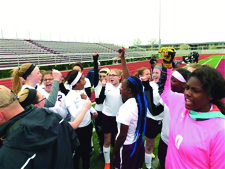
 have successfully competed in thousands of competitions all over Michigan. The mission of the Athletic Department is to provide an athletic environment that compliments the educational experience, promotes excellence through commitment to team and community, focuses on the development of discipline and wellness, and values the ideals of sportsmanship, ethics and growth in humility.
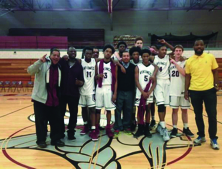 (MAC) in the 2019-2020 school year.” This transition will mean that Hazel Park Athletics will be part of MAC rather than maintaining its traditional spot in the OAA. The reason the Vikings had wanted to make the switch had to do with competitive imbalance, especially in football. Student athletes were competing against districts with much larger enrollment rates. As part of the MAC, they will be vying for titles against schools of similar size.
 the students. “We installed new equipment and wood chips at the playgrounds,” Richardson said. “We got a grant for the drinking fountains through Oakland County. We wanted new water bottle fillers and healthier solutions for the kids.” The fountains are still a work in progress, with all schools set to receive replacement equipment.
 Dulmage, Ed. S., Director of 21st Century Learning. Initiatives such as Early Fives, the Great Start Readiness Grant Program (GSRP), Head Start and Early Head Start strongly reflects the district’s mission.
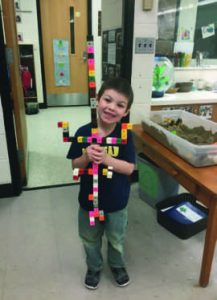 ready for enrollment or have birthdays after the cut-off date. The classrooms offer highly-skilled, personalized learning opportunities with kindergarten curriculum in which students are given two years to learn and grow.” Not every student follows the standard two-year path, however. “Some of our Early Fives do very well and are placed right into first grade after one year,” she said.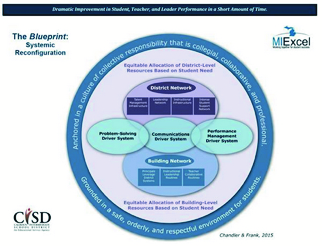
 Elementary School Principal. “Our district was invited to learn about this work due to the fact that at the time we had a school – Hoover Elementary – on the Focus Schools list for the state.”
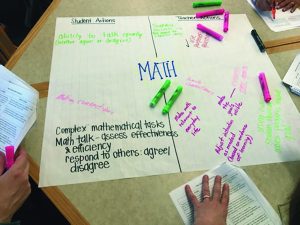 work we are doing involves an overhaul of how we do business – a systemic reconfiguration,” Nastasi explained. “MI Excel has developed a blueprint of systems that are proven through research to be effective. There is a specific plan for different stages throughout the implementation process. The focus is to put systems in place that will help us more effectively provide quality education for our students.”
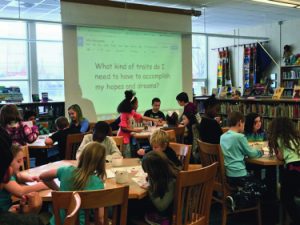 whichever building you are working at will have the same procedures policies and systems in place. It also provides a predictable structure for how we do business. K-12 curriculum and assessments have been written and are updated yearly based on teacher feedback,” she said.
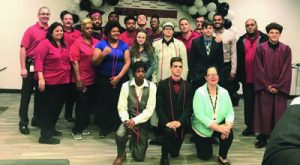 hands-on classes outside of the normal classroom setting at the UAW training site off of 9 Mile Rd. in Warren. “They learn soft skills during the first year, then it’s more hands-on during the second as they really dig into the trades,” Dr. Postell said. “So, they’ll learn about things such as workplace safety and health, the manufacturing process, and look at equipment, then delve into mechanical engineering, welding, electrical, and so forth.” She added, “Students essentially have an opportunity to get the same exposure as candidates would in the full-time Chrysler program. They’re able to put this on their resume, and will receive a certificate of completion and honor cords once successfully graduating from the program.”
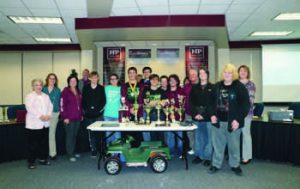 of programming and coding and teaches them the design-thinking process. We have a 3D printer in all environments and teach them basic CAD skills,” said Stephanie Dulmage, Director of 21st Century Learning.
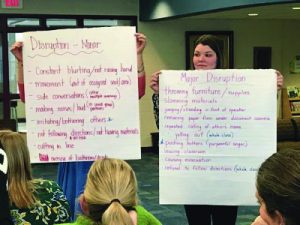 Climate,” said Dr. Michelle Krause, Hazel Park’s Supervisor of Special Education. The Promoting Positive School Climate (PPSC) program helps districts focused on utilizing behavioral resources.
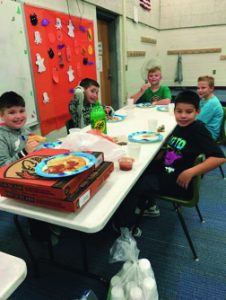 individualized attention. These may include a check-in, check-out system in which a student is paired with an adult who acts as their support. It may also involve developing individual behavior plans.
 Prev
Prev